
The British Council in the Philippines has awarded funding for two Filipino organizations for the Biennials Connect and the International Collaboration Grant. As the United Kingdom’s international organization for cultural relations and educational opportunities, the British Council in the Philippines supports artistic collaborations that facilitate projects addressing local and global challenges, developing the Philippines’ creative industry.
As a huge win for the Filipino creative community, this allows ideas to become tangible objects, events, and projects aimed at improving and providing possible solutions to the hindrances we are facing today.
The International Collaboration Grant
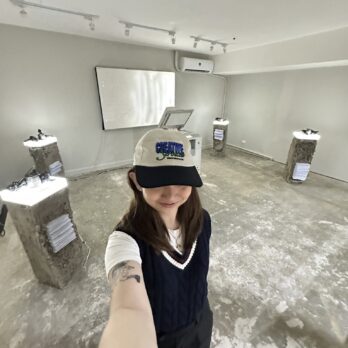
The first grant is the International Collaboration Grant that encourages new international partnerships to develop creative projects and support new and inventive ways of artistic collaboration. In 2025, one of the awards was given to CAREscape, a collaboration between the University of Plymouth (UK) and University of the Philippines College of Architecture (PH). This project unites scholarly and artistic efforts to redefine architectural paradigms in vulnerable areas to climate change and natural disasters, focusing on local knowledge and community engagement, and promoting innovative, inclusive, and resilient architectural practices.
Biennials Connect
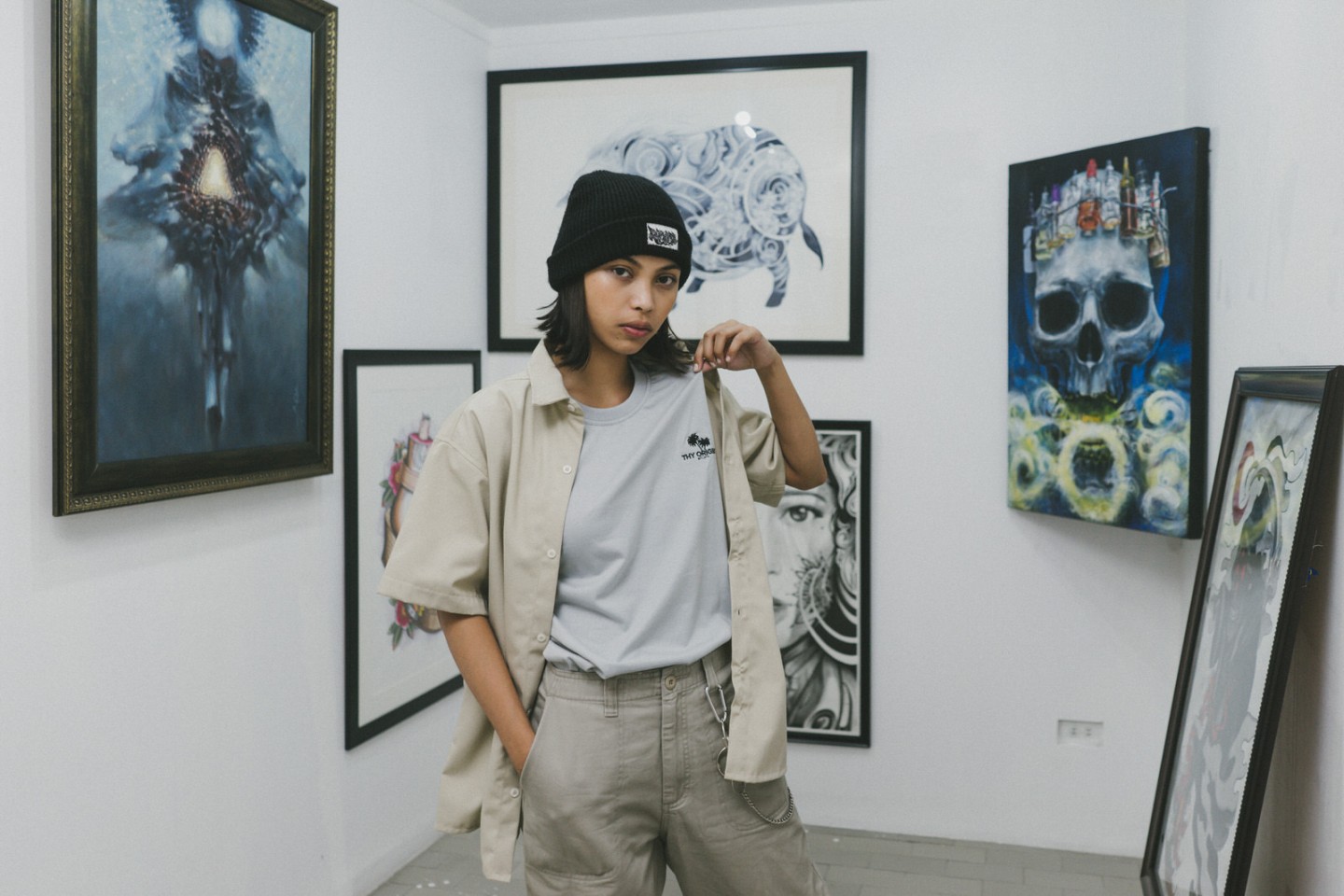
The second grant, the Biennials Connect, brings together early- and mid-career international curators to support their practice, development, and collaboration. For this year, one of the awardees is 98B Collaboratory, an independent, artist-run space in Escolta, Manila, that serves as a multidisciplinary art laboratory, providing a platform for critical discourse, experimentation, and presentation of contemporary art in the Philippines. Their project, ESC Biennale, will play around the theme “tambay”, reflecting on the Filipino spirit of gathering and hanging out.
We had a dialogue with the University of Plymouth and the University of the Philippines College of Architecture, and 98B Collaboratory on a dissection of their projects, investigating their profound and important elements and how they can affect our understanding of our culture, and our Filipino values as a whole.
CAREscape reimagines healthcare
This collaboration between the University of Plymouth and the University of the Philippines College of Architecture aims to challenge the top-down models of current healthcare infrastructures that do not necessarily reflect the lived experiences and realities of communities impacted by the climate. With the use of creative deep mapping, walking methodologies, and participatory design studios, their approach directly involves local communities in the creation of care spaces.
“The project works through co-creation, enabling residents, artists, and architects to collaboratively design spaces that reflect climate challenges and local resilience,” Professor Mona Nasser of the University of Plymouth shared during our correspondence.
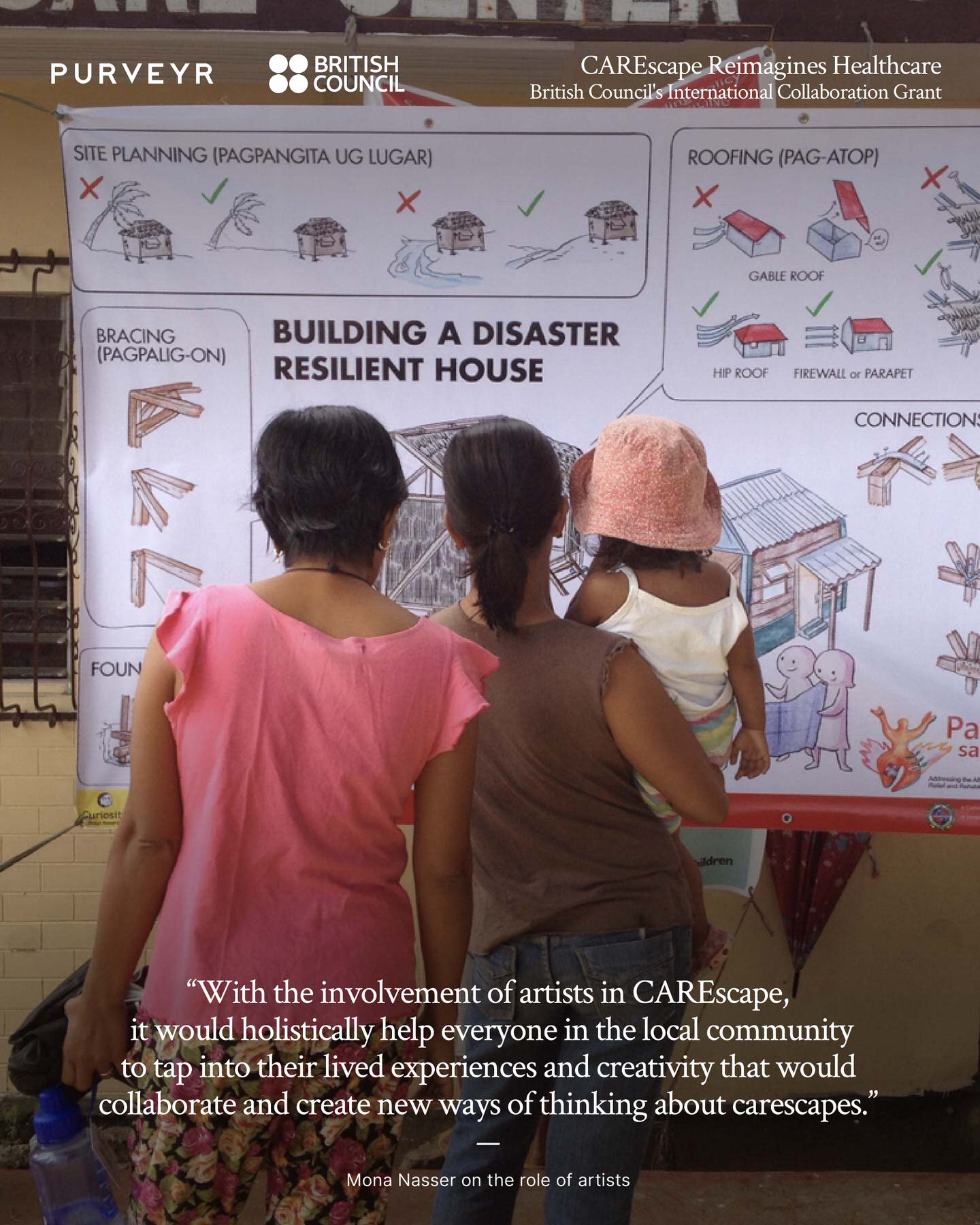
Meanwhile, exhibitions, performances, and digital outputs serve as public education platforms, raising awareness on the intersection of climate justice and healthcare design. With the involvement of artists in CAREscape, it would holistically help everyone in the local community to tap into their lived experiences and creativity that would, in return, collaborate and create new ways of thinking about carescapes.
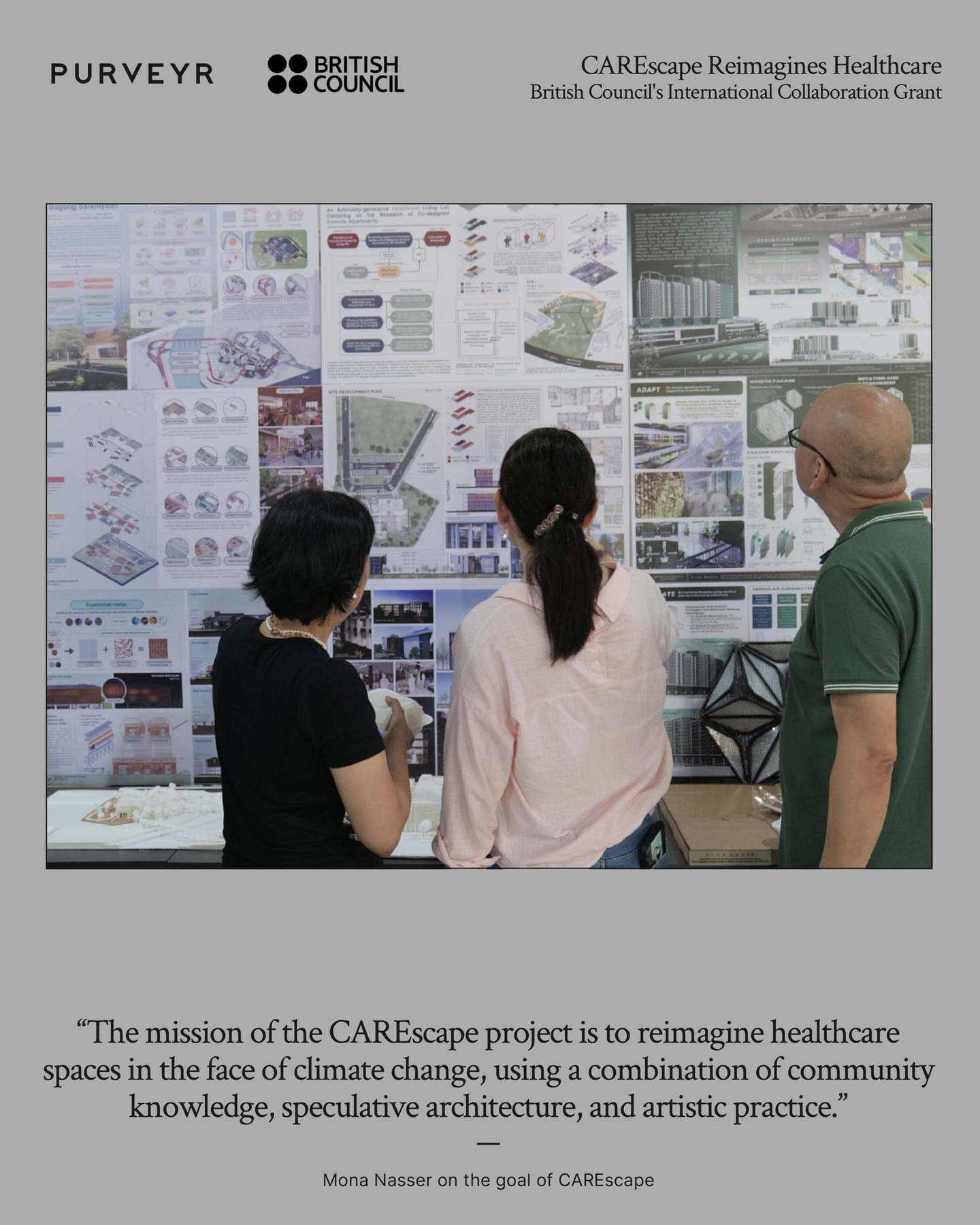
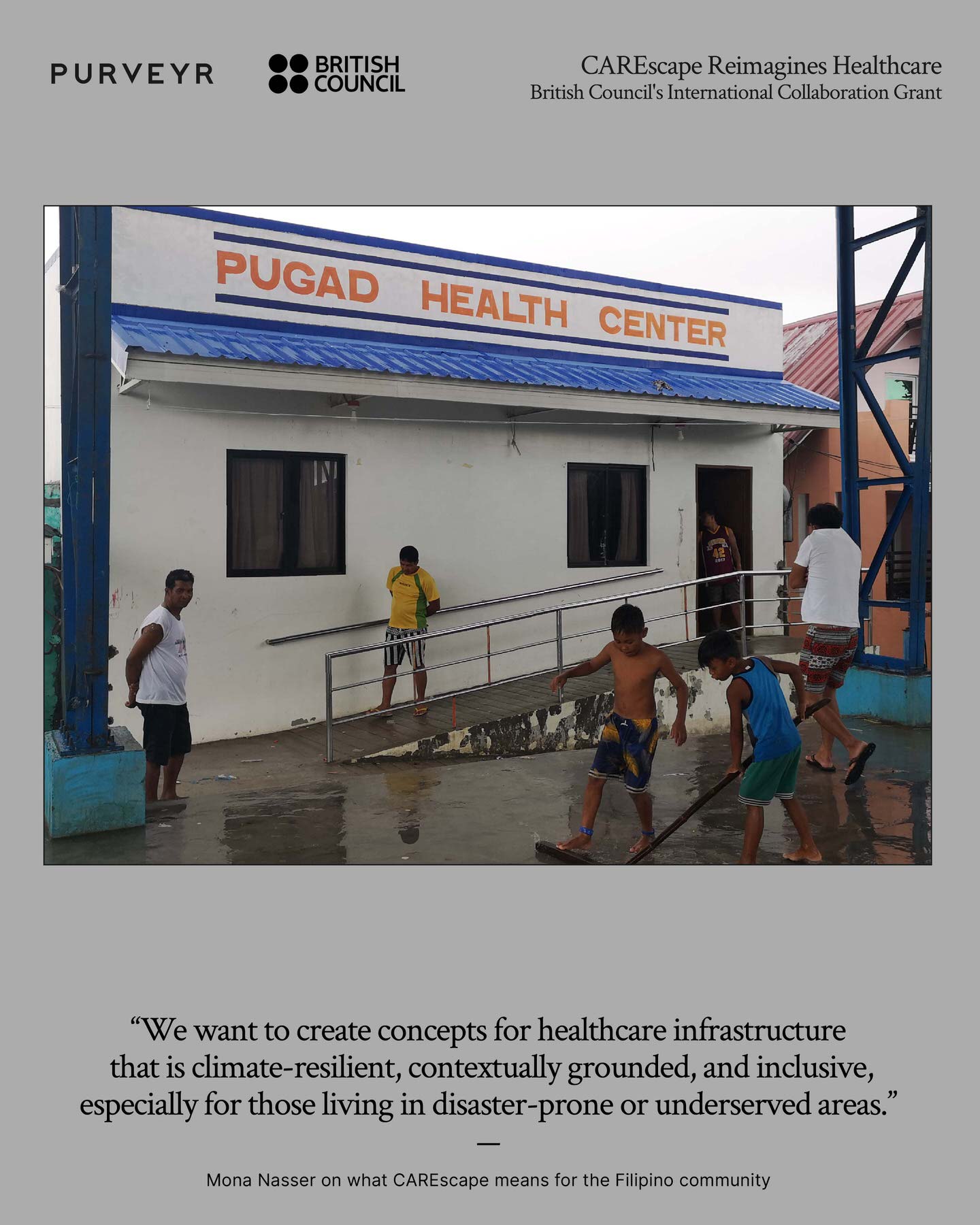
When asked about the goal of this collaboration, here’s what Professor Nasser had to say. “The mission of the CAREscape project is to reimagine healthcare spaces in the face of climate change, using a combination of community knowledge, speculative architecture, and artistic practice. For the Filipino community, this means creating concepts for healthcare infrastructure that is climate-resilient, contextually grounded, and inclusive, especially for those living in disaster-prone or underserved areas. It is about centering local voices, cultural memory, and intergenerational knowledge to inform the future of care, making healthcare more accessible, meaningful, and empowering to the communities it serves.”
ESC Biennale and the art of tambay
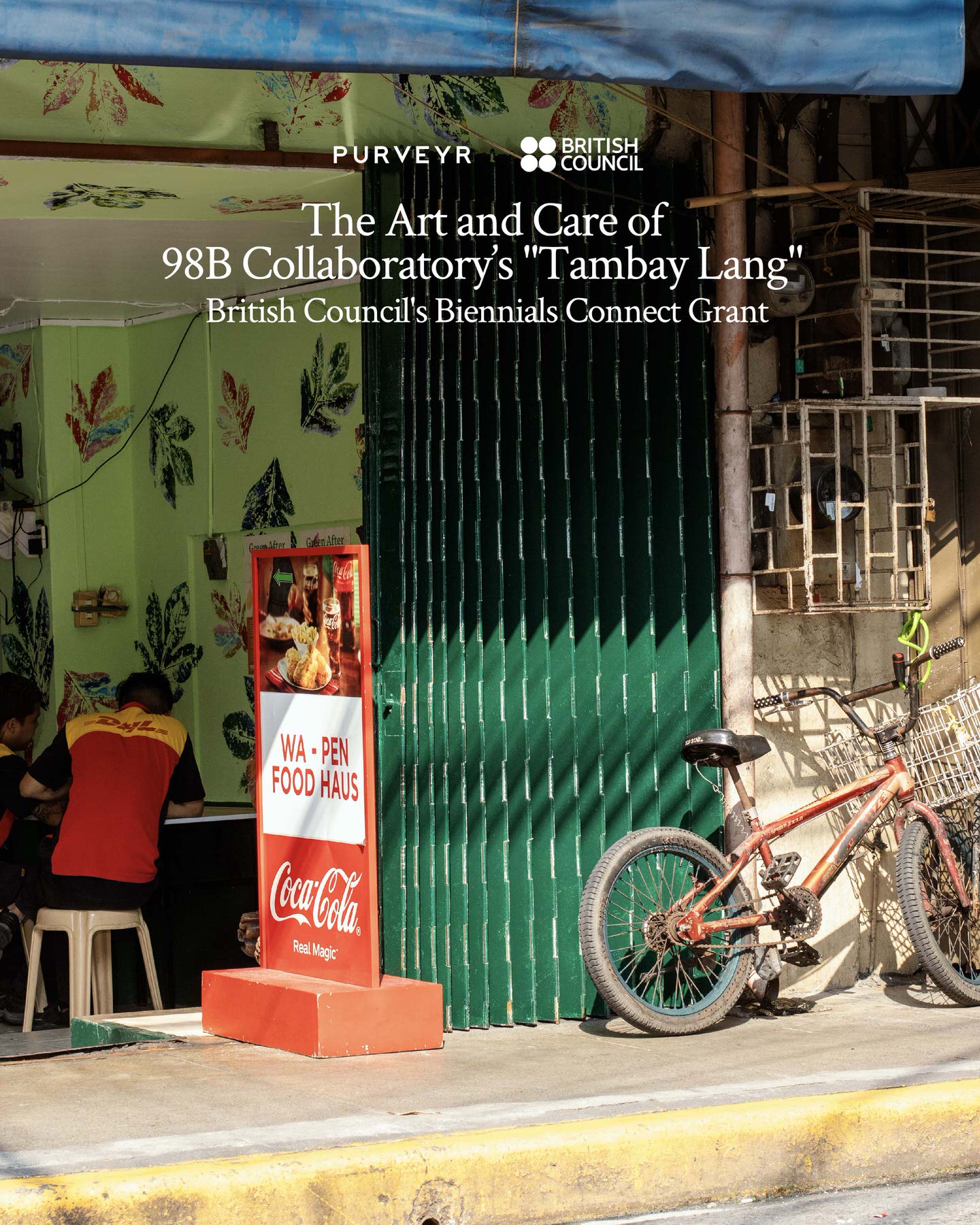
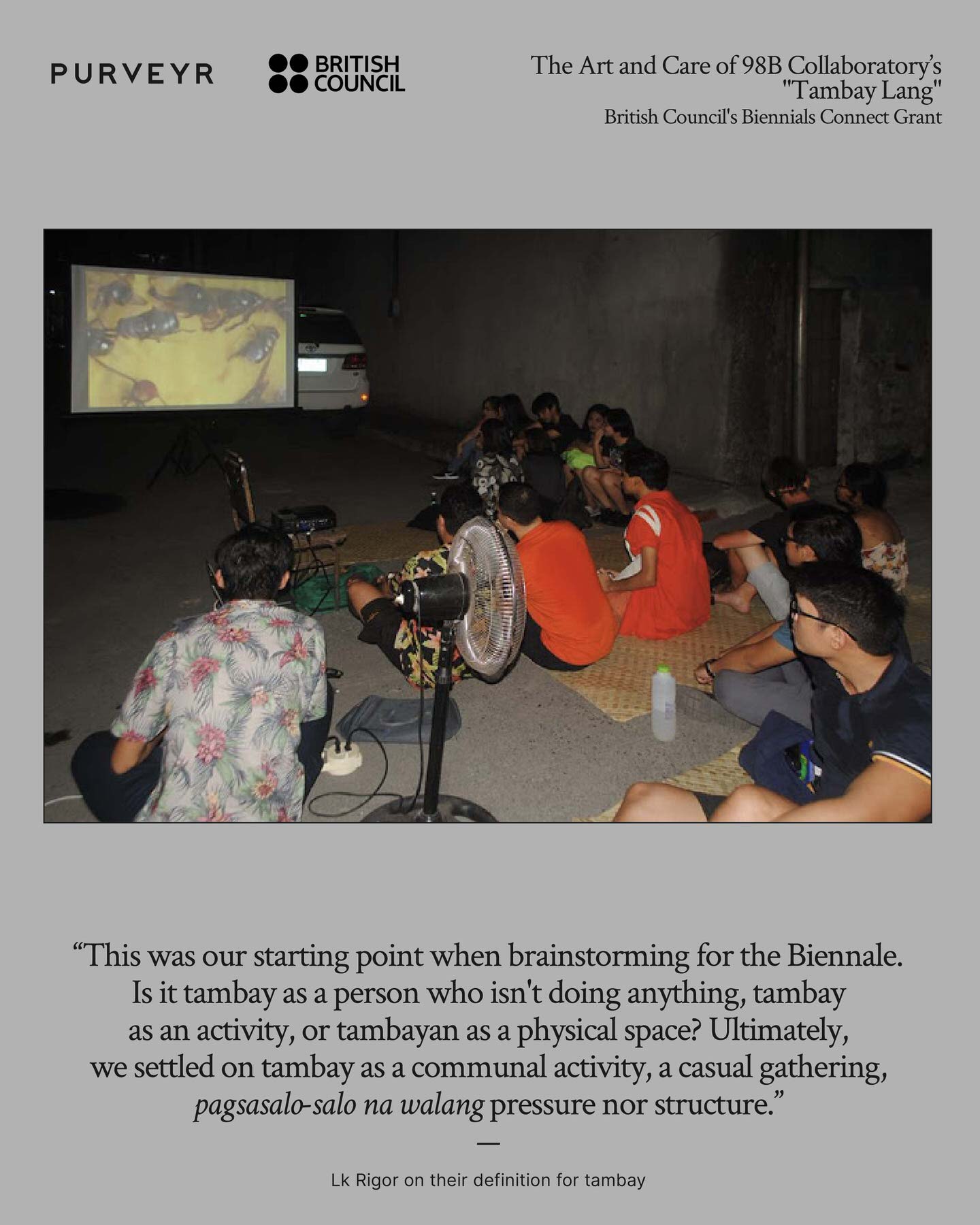
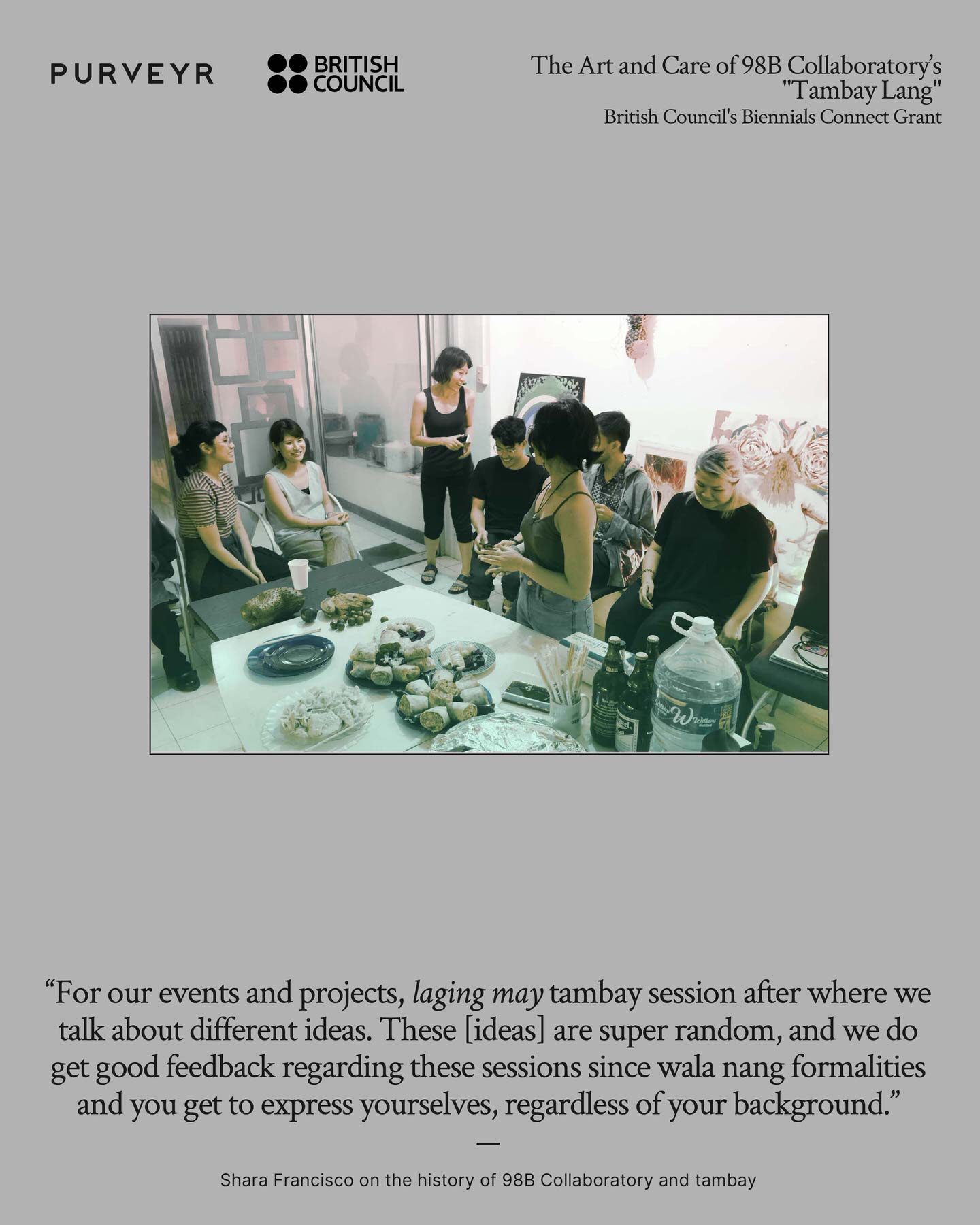
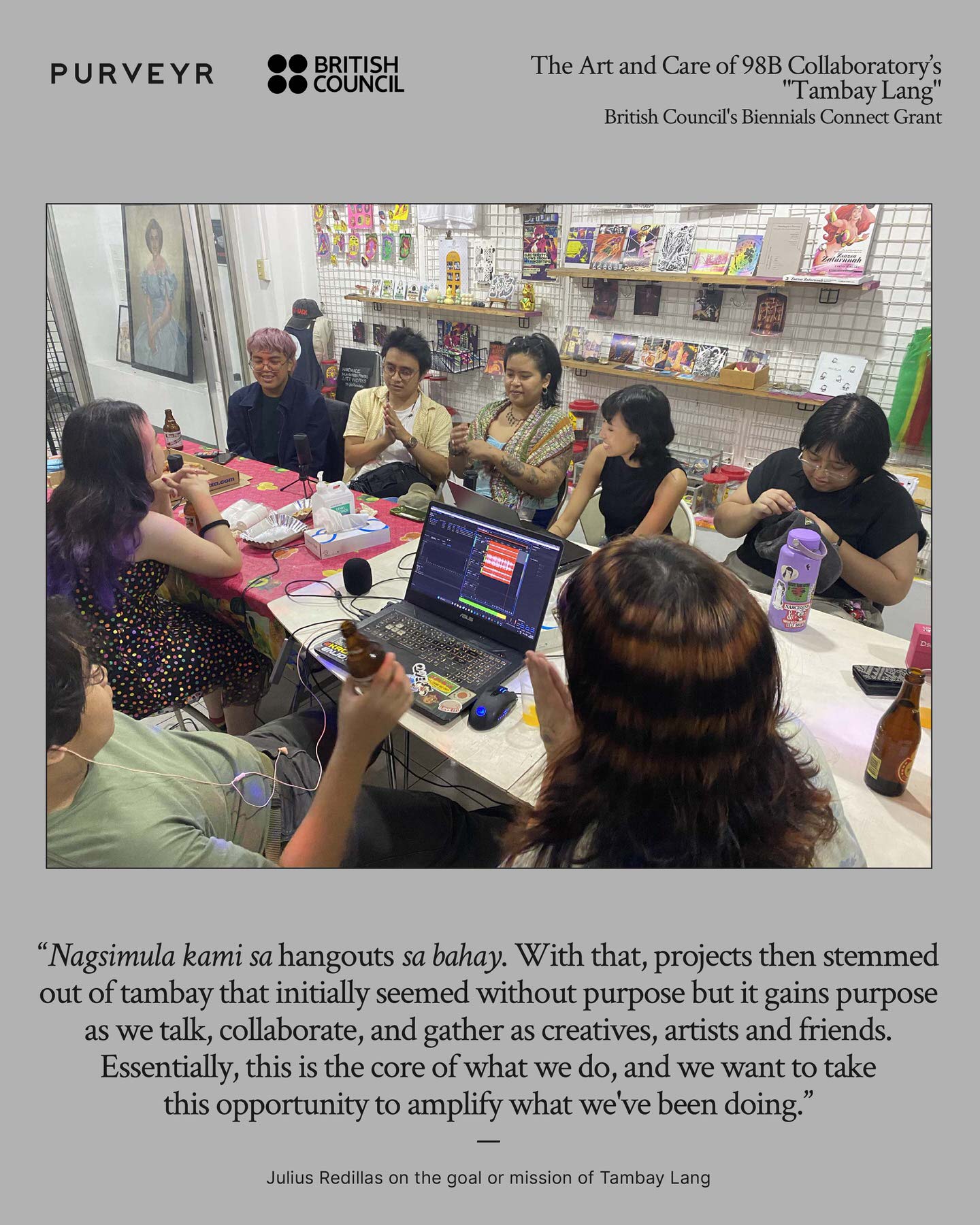
For our interview, 98B COLLABoratory members Lk, Julius, Shara, and Rene gathered and recorded their answers together, in true tambay fashion. This is what they want to provide in their ESC Biennale this year—something that remains authentic to the way they create and brainstorm in this artist-run initiative. With this being the 4th iteration of the event since 2016, “Tambay Lang” goes back to their roots as an artist-run space where their local communities thrive through tambay culture.
As shared by 98B COLLABoratory Co-Director Julius Redillas, “Nagsimula kami sa hangouts sa bahay [We started through hangouts at home]. With that, projects then stemmed out of tambay that initially seemed without purpose but it gains purpose as we talk, collaborate, and gather as creatives, artists and friends. Essentially, this is the core of what we do, and we want to take this opportunity to amplify what we’ve been doing. Mallit man, matagal man, saan man, ‘yung value ng tambay yung nahi-highlight [Even if it’s simple and takes a while and wherever it is, the value of tambay is highlighted].”
“For our events and projects, laging may tambay [there’s always a tambay] session after where we talk about different ideas. These are super random, and we do get good feedback regarding these sessions since wala nang formalities and you get to express yourselves, regardless of your background,” Shara Francisco, Creative Director of ESC Biennale 2025, added.
When asked about their definition for tambay and how it is differentiated from the Western counterparts of “hanging out” or “third space”, here’s what Lk Rigor, the Curatorial Director for ESC Biennale 2025, had said: “This was our starting point when brainstorming for the Biennale. Is it tambay as a person who isn’t doing anything, tambay as an activity, or tambayan as a physical space? Ultimately, we settled on tambay as a communal activity, a casual gathering, pagsasalo-salo na walang pressure nor structure.”
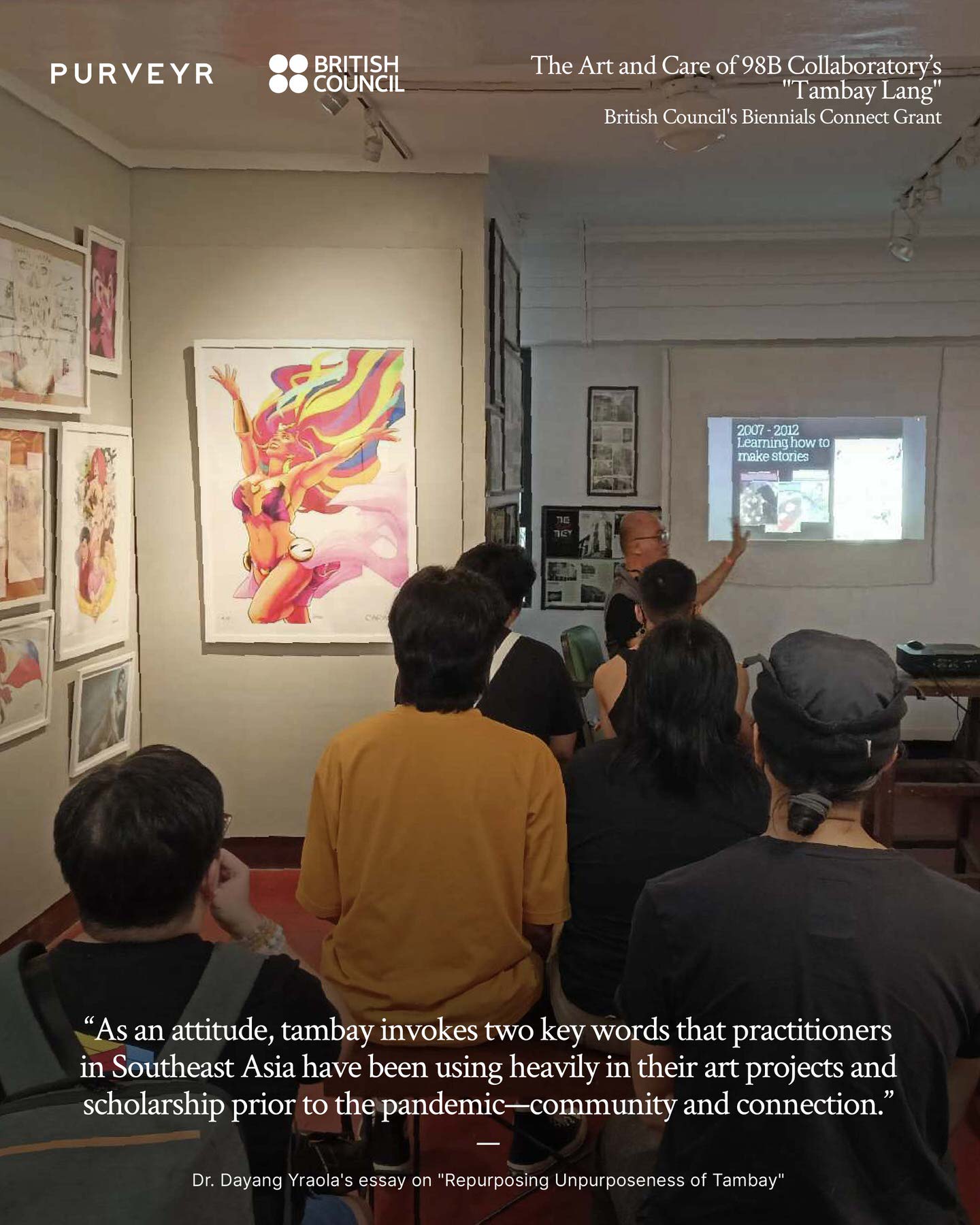
They brought up Dr. Dayang Yraola’s 2024 essay titled “Repurposing Unpurposeness of Tambay” and would like to highlight her explanation that put into words what 98B COLLABoratory wanted to say, as a group of artists, creatives, and cultural workers.
“As an attitude, tambay invokes two key words that practitioners in Southeast Asia have been using heavily in their art projects and scholarship prior to the pandemic—community and connection. People come together not because it is their preferred genre, or [because they are interested in] topics of discourse. Instead, most of the time, their presence is mostly because their friend or family is there.”
As for the elements of tambay that they view prominent in Filipino culture, or Southeast Asian culture for that matter, are the presence of food, inuman, chismis, evoking a safe space that remains casual. They also recognize that there are still negative connotations to tambay, especially when describing a person, so there’s also a social layer to it that they also want to be mindful of. From a visual perspective, Shara shared the imagery of comfort through monoblock seats and bangko, a frequent precursory furniture that enables people to tambay.
What lies ahead
For CAREscape, audiences can look forward to a multimedia exhibition of the prototypes and concepts behind these new carescapes in both Manila and London. The Manila exhibition, scheduled for July 2025, will showcase prototypes, visual artworks, community maps, and performances born out of collaborative workshops. In September 2025, a corresponding exhibition in London will happen. The exhibition acts as a public forum with Filipino artists and architects reflecting on the process and its implications for global health and climate resilience. These exhibitions are not just displays—they are invitations to dialogue, dream, and design the future together.
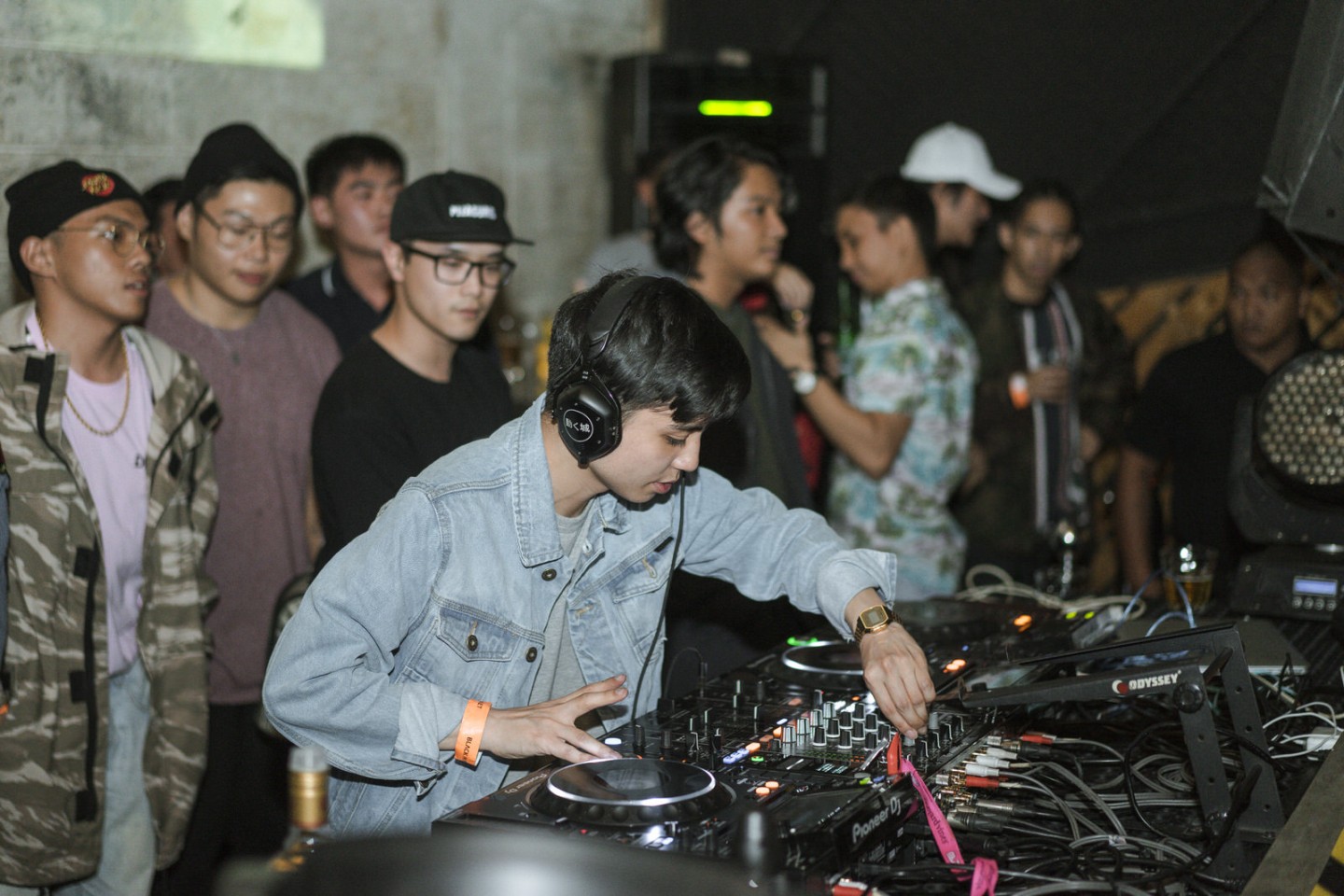
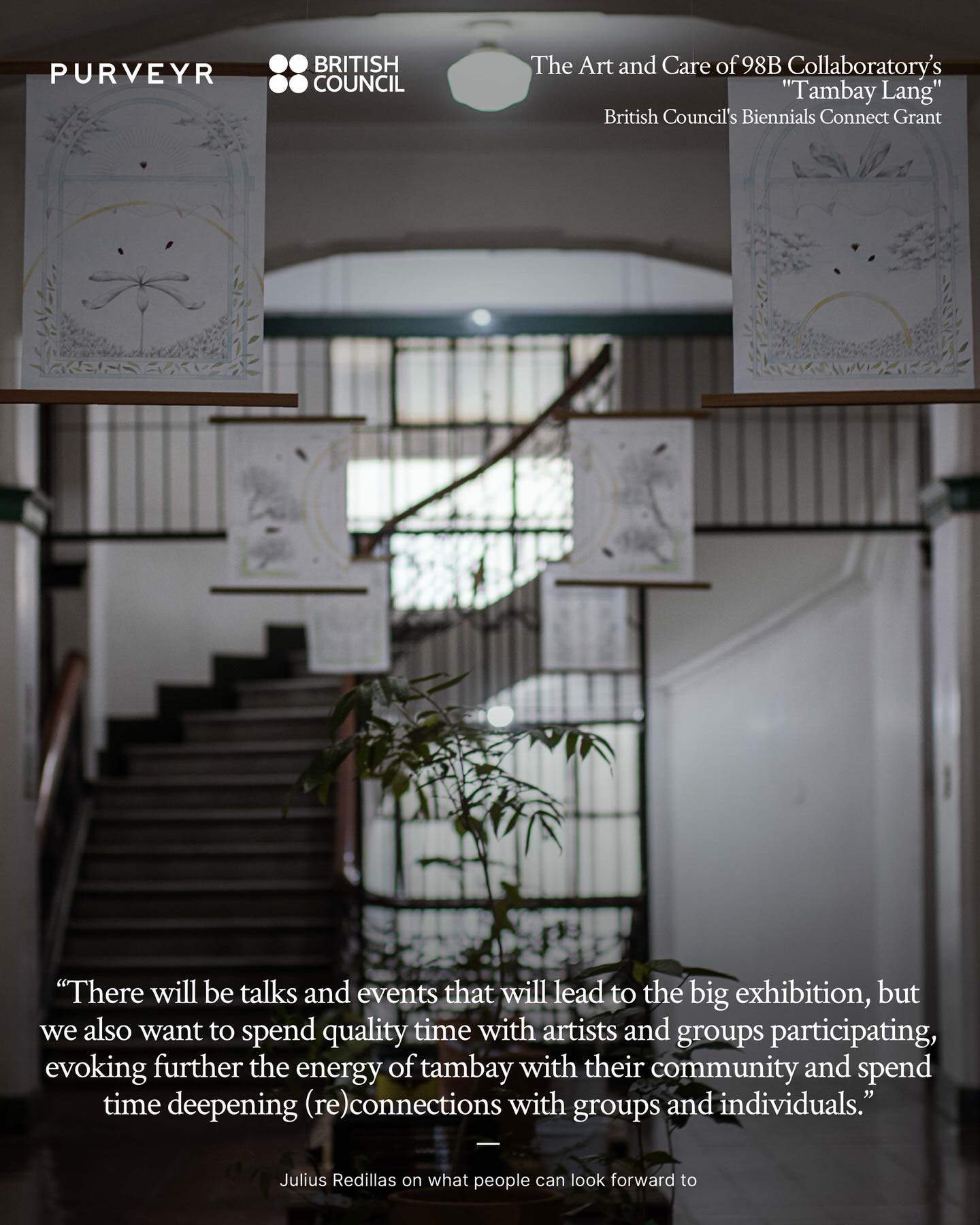
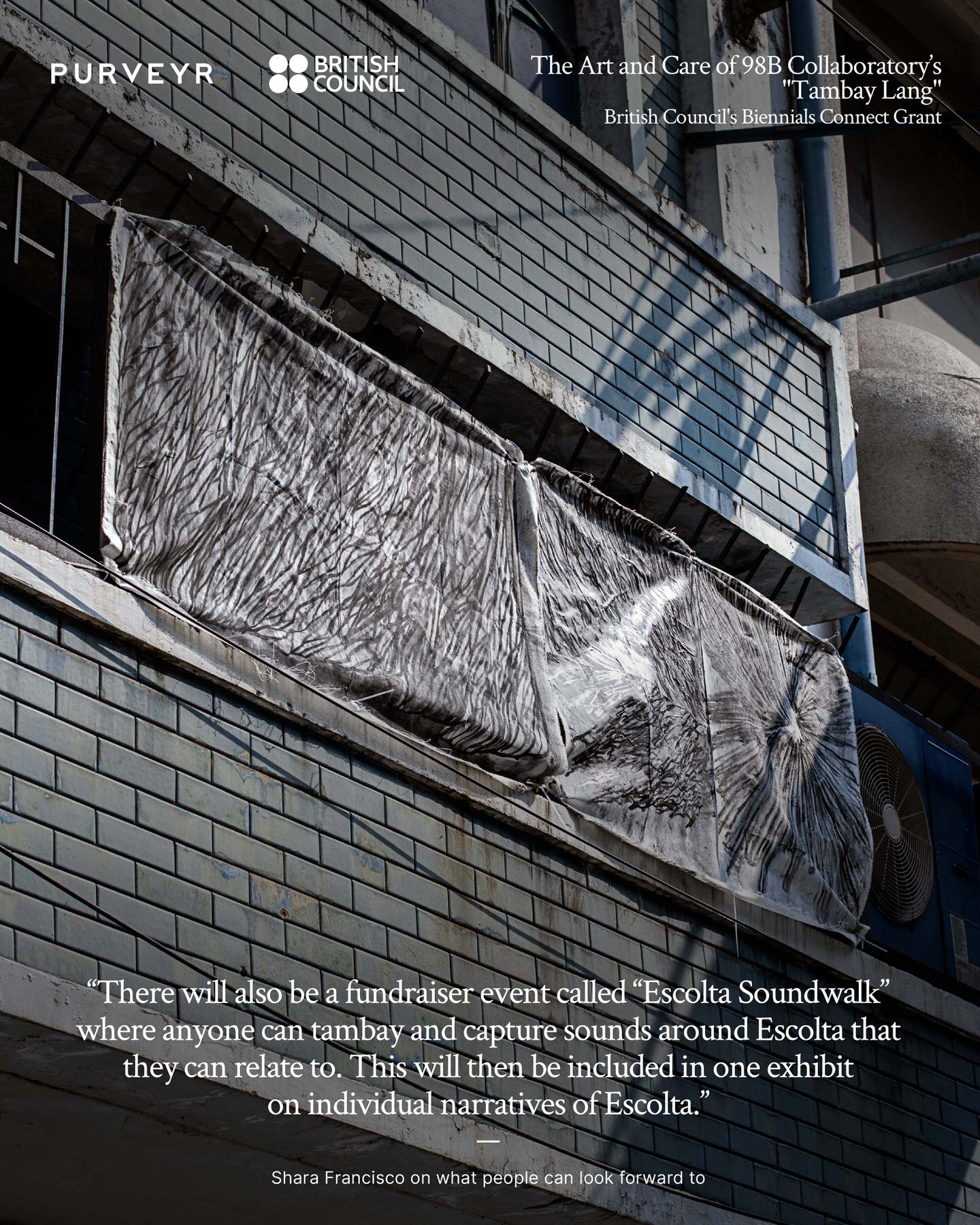
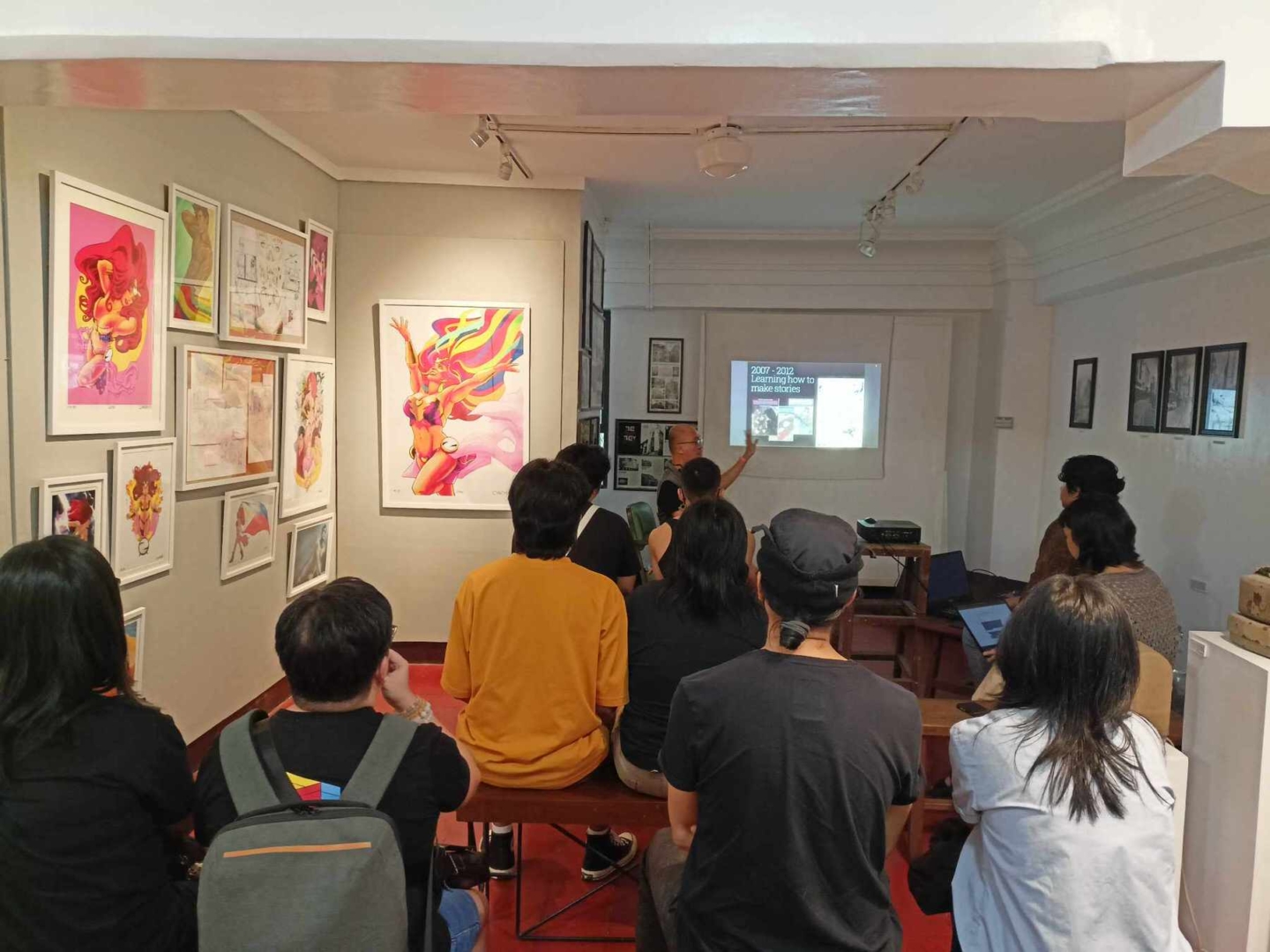
On the other hand, there will be an Open Call for a UK-based artist to participate in the ESC Biennale that will include a residency, as well as a Space Grant for ESC Projects for a 1 Philippine-based artist that will also be mounted during the biennale. Apart from these, they are also archiving materials from the past three iterations of the ESC Biennale, with plans of a publication. There will also be talks and events leading up to the biennale in November, evoking further the energy of tambay with their community and spending time deepening (re)connections with groups and individuals. Lastly, there will be a fundraiser event called [expr ~0]. It is an experimental performance series inviting collaborations, supporting “Walking Escolta”, a multi-sensory walk and counter-mapping session where anyone can tambay and capture sounds around Escolta that they can relate to.